Emotion Surfing is a nonprofit delivering interactive, hands-on emotional intelligence workshops for elementary, middle, and high school students, advised by researchers from the Yale Center for Emotional Intelligence.


Emotion Surfing exists to give students real command over their emotions. Not fixed rules, but skills they can ride like a wave: recognizing what they feel, understanding why, and choosing what to do next. Through student-led workshops, peer mentorship, and a curriculum grounded in the Yale RULER approach, we equip students to navigate the emotional complexity of adolescence with confidence.
Students learn to name and recognize emotions as they arise, building the vocabulary to notice what's happening internally.
Understanding the root cause of a feeling, the trigger behind it, so it stops feeling random or overwhelming.
Turning insight into a concrete, healthy response. The regulation strategies that make emotional intelligence usable in real life.
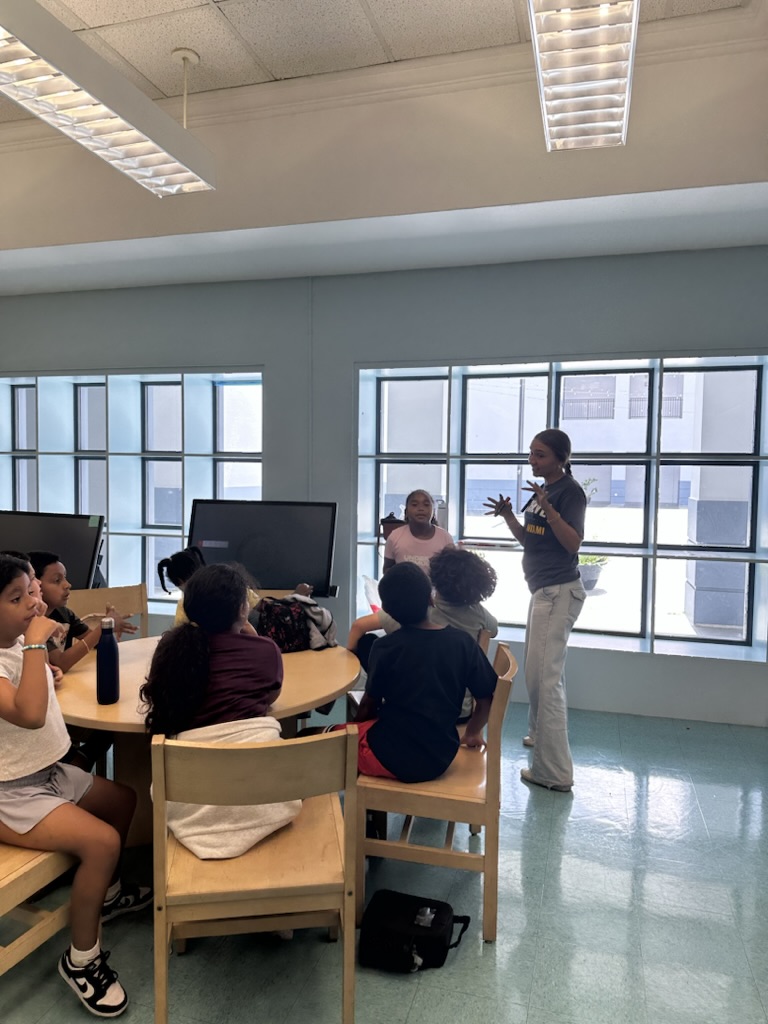
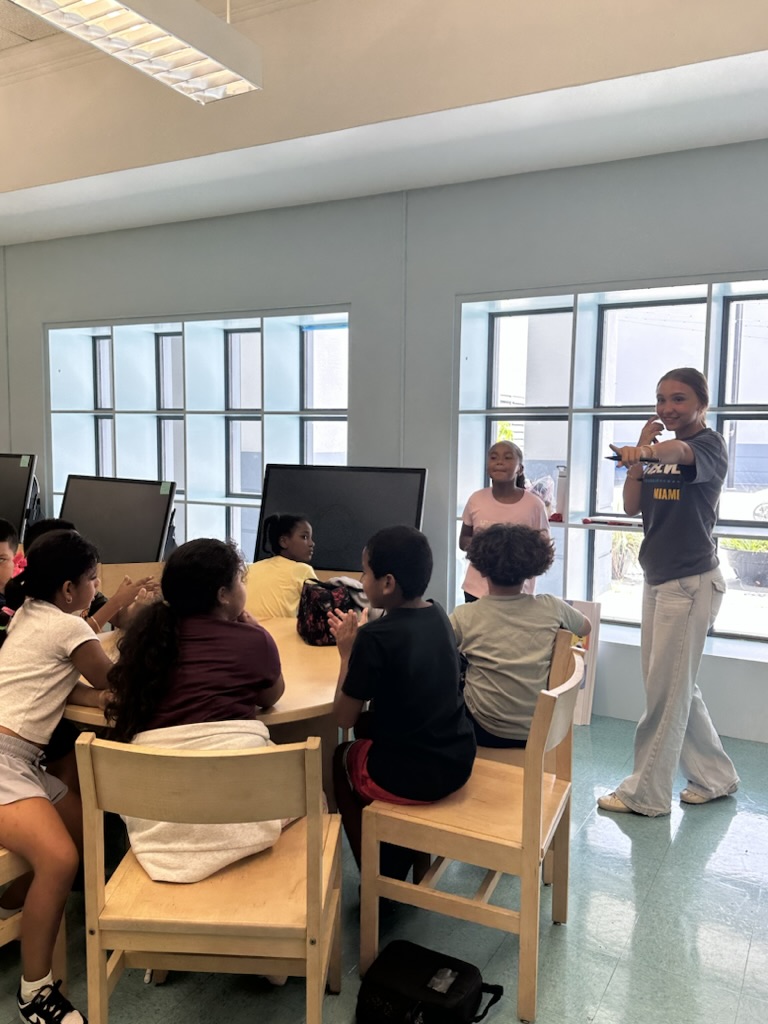
The curriculum runs as six 45-minute workshops split across two days, with every activity adapted to the age group in the room.
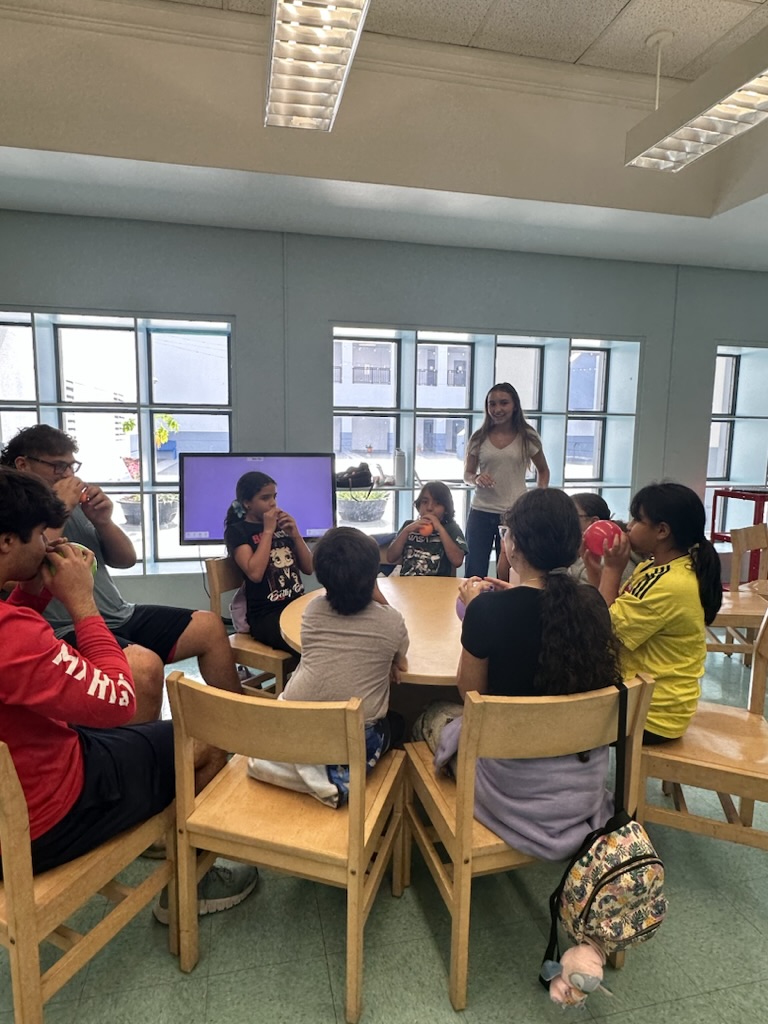
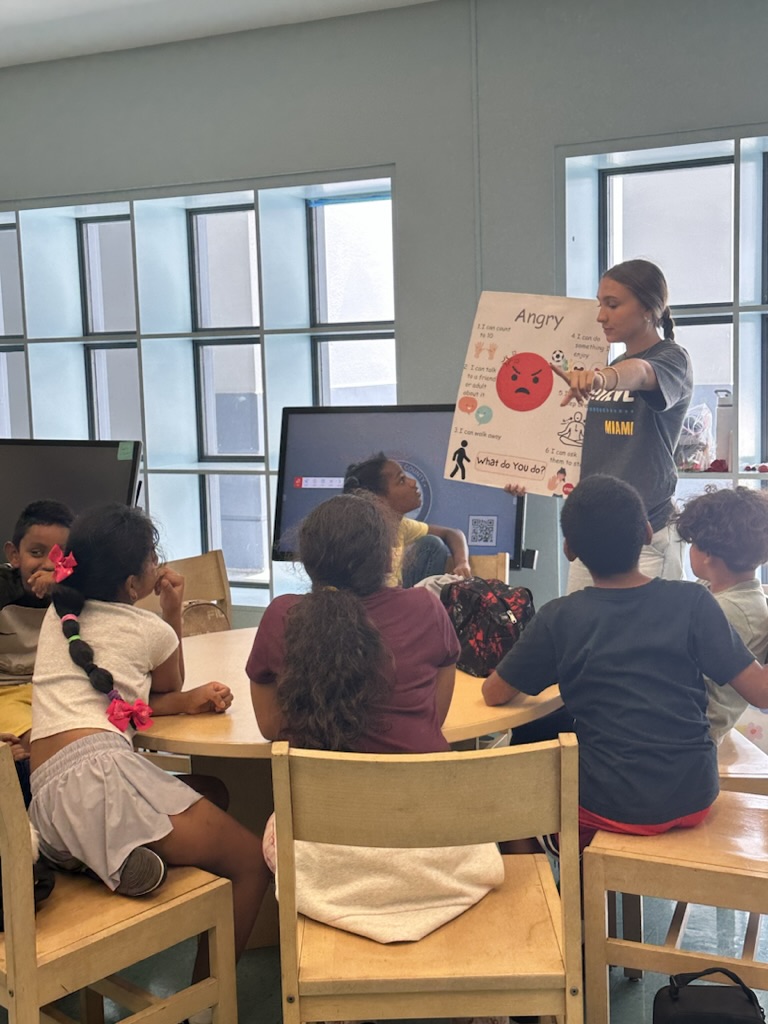
Balloon breathing, facial expression games and challenges, emotion identification, scenario cards, and real-life discussion, along with an introduction to Emotion Boards for identifying and regulating feelings.
A recap of day one through interactive questions, then regulation strategies, scenario cards, small-group collaboration, Emotion Boards, reflections, and take-home practice.
Through balloon breathing and games like "show me your happy, mad, or sad face," students learn to notice and name basic emotions in themselves and others, using toys and everyday scenarios like winning a race or having a toy taken. On day two, they move from naming feelings to practicing simple responses, working through scenario cards in small groups.
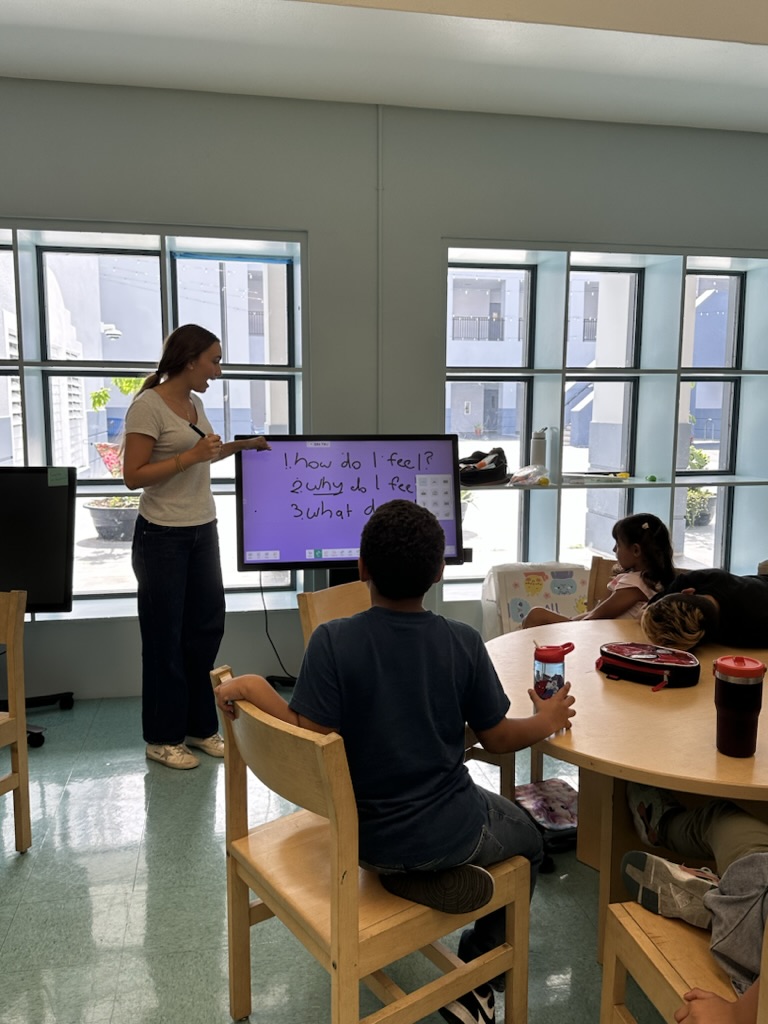
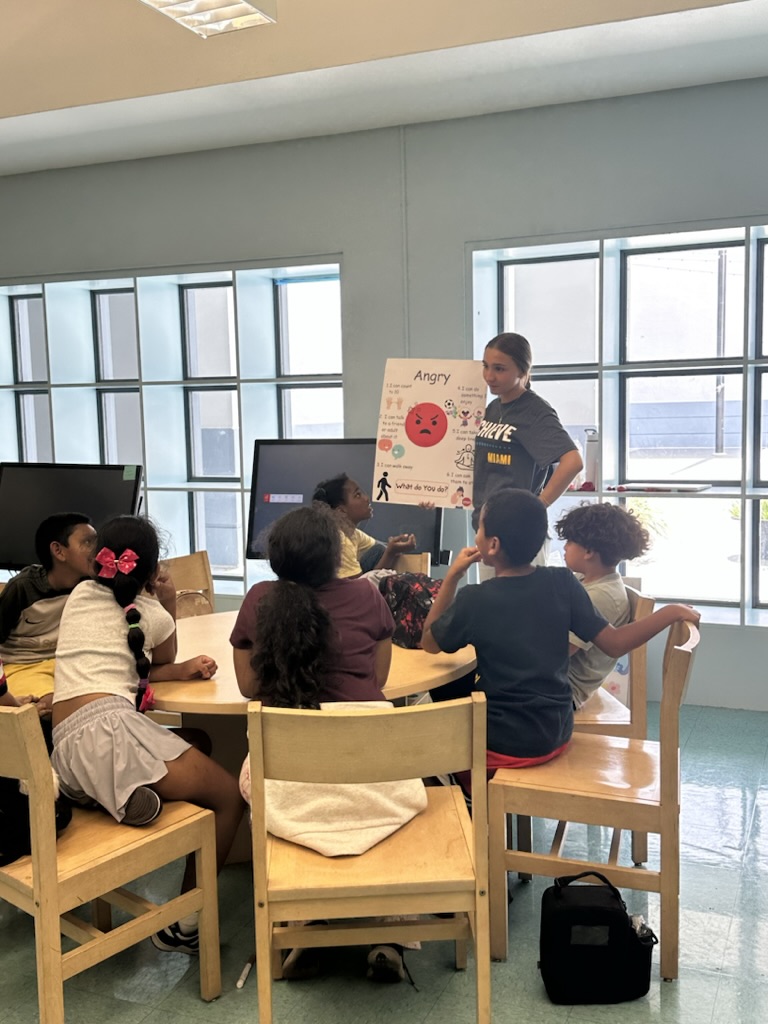
Students learn the TEA framework (Trigger, Emotion, Action) to unpack why they react the way they do, using scenarios like an unfair game or a broken promise to practice spotting triggers and seeing another person's perspective. They also build concrete anger-coping tools, like deep breathing, counting to ten, and walking away, and practice choosing a response instead of reacting on impulse.
Building on the same recognize-and-regulate framework, students work through scenario cards in small groups where they identify the feeling, decide on a response, and explain their reasoning, adding a real layer of critical thinking beyond the younger grades. They also revisit healthy anger management strategies and discuss how understanding emotions helps them solve problems and support the people around them.
Research published by Harvard Business Review has found that leaders with stronger emotional intelligence build more engaged teams, collaborate better under pressure, and retain talent longer. Emotion Surfing teaches these same self-awareness and regulation skills early, well before someone is ever managing a team of their own.
TalentSmart, one of the largest providers of EI testing worldwide, found in a study of nearly a million professionals that emotional intelligence was the single strongest predictor of performance, outweighing experience and technical skill alone.
Daniel Goleman, the psychologist and science journalist who popularized emotional intelligence with his 1995 bestseller, synthesized decades of research to argue EI can matter more than IQ in determining real-world success, reshaping how schools and workplaces think about skill-building today.
Adriana presented "Miami's Rise of Emotional Intelligence Education" at the SFERE Conference, a student-led innovation and entrepreneurship event hosted at Ransom Everglades School, examining how EI education could shape Miami's economy through 2035: worker productivity, healthcare cost savings, reduced turnover, and student future earnings.
of U.S. high schoolers report persistent feelings of sadness or hopelessness, a figure that has climbed steadily over the past decade. This is the generation Emotion Surfing is built for: kids who need real emotional skills now, not after the fact.
Source: CDC Youth Risk Behavior Survey, 2023An evidence-based social-emotional learning curriculum developed at the Yale Center for Emotional Intelligence, shown to strengthen students' emotional skills. Emotion Surfing's curriculum is built alongside this framework.
Developed by Dr. Daniel Siegel, psychiatrist and founding co-director of UCLA's Mindful Awareness Research Center. Noticing and labeling an emotion as it happens measurably reduces the stress and reactivity it causes in the brain and body. This is the core technique behind every Emotion Surfing workshop.
Studies on near-peer education and stage-environment fit theory point to something beyond trust: teens are simply better positioned to model real emotional scenarios for other teens. The same circumstances, pressures, and generation, made current and relatable in a way adults can't replicate. That relationship-first bond is the research basis for Emotion Surfing's student-led model.
Most SEL curricula are written and delivered by adults. Emotion Surfing is designed and delivered by a student, for students. That's not a marketing angle; it's the research-backed reason a near-peer model works.
Presented the EI curriculum for the first time to YFC, a global Catholic youth group that is part of CFC, speaking to a room of high school students, college students, and their parents.
Delivered a workshop at Xishiku Cathedral of the Roman Catholic Archdiocese of Beijing, China, connected to the CFC organization, bringing the same curriculum to students on the other side of the world.
Taught emotional intelligence skills to middle and high school students in Hebei, China, with Adriana's older sister translating the workshop into Chinese as it was delivered.
Partnered with Hope for Miami to deliver a two-day Emotion Surfing workshop at their Wayside Baptist Church location, with age-adapted activities from balloon breathing to scenario cards.
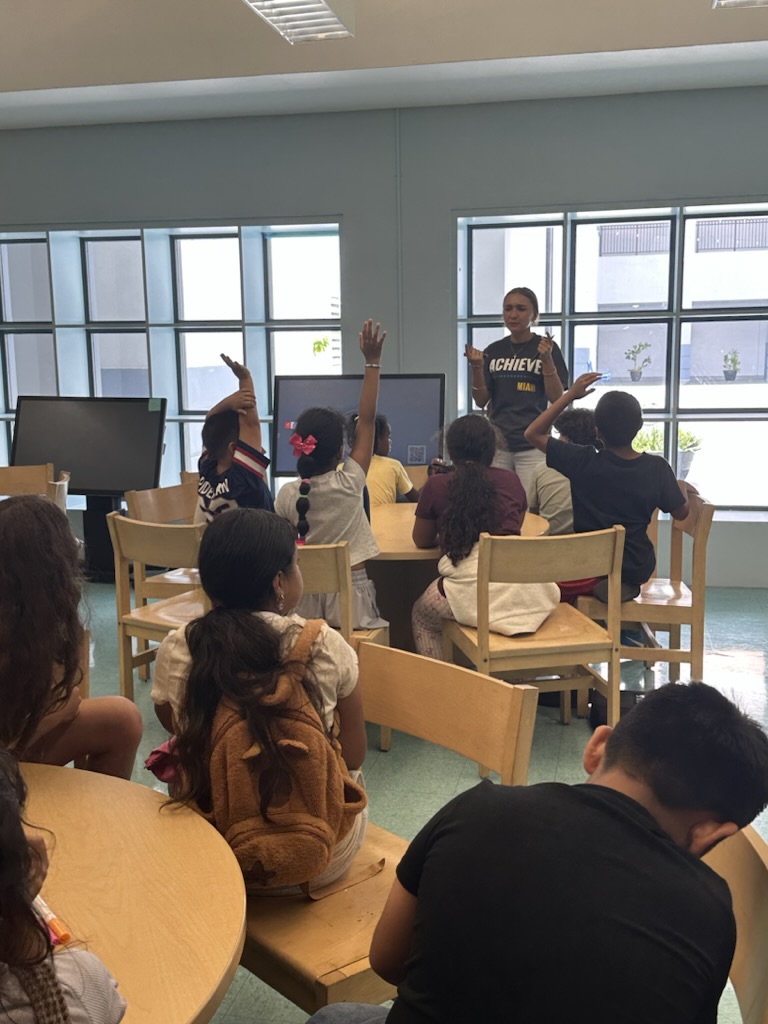
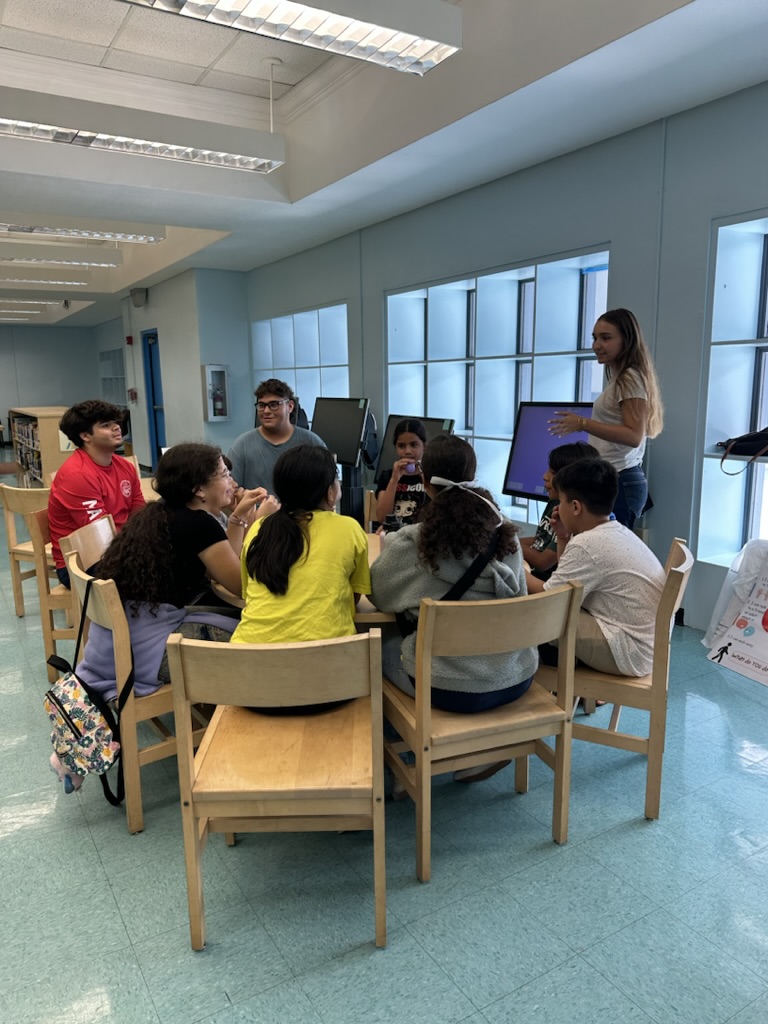
Partnered with Achieve at Riverside Elementary, delivering six 45-minute workshops across grades 1 through 5, the same two-day curriculum now running as Emotion Surfing's core program.
Invited to present at SFERE, a student-led innovation and entrepreneurship event hosted by the Miami Venturing Entrepreneurs at Ransom Everglades School, bridging economics, finance, and international relations.


From the six workshops delivered with Achieve at Riverside Elementary.
Adriana was born in Spain, spent her infancy in China, and her toddler years split between Italy, Spain, and Japan before settling in Miami, where she's lived for the last seven years. Growing up across four countries and three languages, she saw firsthand how differently people are taught to name, express, and manage their emotions from one culture to the next, and how rarely that skill is taught deliberately anywhere at all. Emotion Surfing grew directly out of that observation: a platform built to close that gap, equipping students and communities with the emotional intelligence skills they need, informed by a genuinely multicultural view of how emotions are understood and taught around the world.
Founding director of the Yale Center for Emotional Intelligence and a professor in the Child Study Center at Yale University. Dr. Brackett is the author of "Permission to Feel" and "Dealing With Feeling," and the lead developer of the RULER approach that Emotion Surfing's curriculum is built alongside.
Associate Research Scientist on the Implementation Science team at the Yale Center for Emotional Intelligence, where his work focuses on how evidence-based emotional intelligence programs get put into real-world practice in schools.
Lisa Reese was a certified coach who spent her career helping others build emotional intelligence skills. A mentor, a former Girl Scout Leader, and a Girls on the Run Co-Leader in her community, Lisa was one of the first people to believe in Emotion Surfing. Her belief in this work, and in the students it serves, carries through everything the organization does.
Professional training: Adriana has additionally completed a professional training workshop with Six Seconds, the world's largest network of emotional intelligence practitioners.
Workshops are tailored by grade level, from balloon breathing with 1st graders to real-scenario regulation practice with high schoolers. Student-led, hands-on, and built on research your administrators can stand behind.
Tell us about your school or group and we'll follow up with formats, availability, and everything you need to bring a workshop to your students.
Your message is in. We'll follow up by email with workshop formats and availability.